About Me

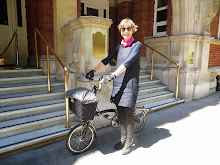
My photo
Whether it's five miles or five hundred miles, riding a bicycle is more fun than anyone ever told me! My New Year's Resolution to cycle 10 miles a day or 40 minutes on a spin bike has meant that by the end of May I have cycled 2,600 miles! Because of my cycling wardrobe the weather has not stopped me from cycling (unless it really is -5 degrees or with wind gusts of 25 mph). Cycling in style and in comfort is really important to me as I don't really want to be covered in logos looking like a Ninja as I buy groceries or attend meetings. I have found some things that work for me but am always looking for new pieces. For me, Evans Cycles and Cycle Surgery for the basics. My two favourite brands for my wardrobe are www.velorution.com and www.velovixen.com but I am always looking for new pieces. I would love to know what works for you and why. Happy cycling!

Wednesday, 30 January 2013

Accessories for me

This can be a very expensive section!

The added extras you need for both your wardrobe and your bicycle can go on and on.  For me, starting from the top I wear a helmet.  This can be a heated-debate situation as research does not show conclusively that a helmet is a good thing to wear. Indeed in some cases it has been shown that it can cause more damage than good.   Some people feel quite strongly about this for a whole host of reasons and so I don't recommend voicing an opinion one way or another.   I don't mind what other people do.    I wear one because it's my head.


In the winter and on cooler days I wear a buff - a fabric collar rather like a neck scarf but doesn't come undone.   


       It was on this ride to Paris that I learned what hard work it was to cycle with a rucksack!


For long rides I also wear cycling glasses.  These are shaped to stop air and grit from going into my eyes - they are prescription and reactolite.  I need to be able to see road signs and potholes along with my watch and computer without hesitation.  Mine are from Optilabs in Croydon, Surrey who also do mail order.  

I always wear gloves. Always.  In the summer they are fingerless and in the winter Goretex with an extra pair of liners.  


Overshoes for wet or cold rides really make a difference - if you are wearing cycling shoes.  They are not 100% waterproof as eventually, in torrential rain and wet roads your feet will get wet.  But they do make a difference.

Woolen socks also help and in the winter there are a brand Sealskinz which have an internal plastic liner to stop water from getting to your toes.  Again, eventually they will get wet.  Carrying spare socks in the winter or in the wet is a great thing to do, your feet will really appreciate it!  


                             This is what I had to do before I bought my Sealskinz!


Overtrousers are also great for both cold and wet rides. It is amazing how much warmer you are.  In the deep winter days and nights I wear overtrousers all the time, over two pairs of leggings.

Moneybelt - mine is from Runners Need and it means that my most valuable possessions are on me rather than my bike.


 I am sure I will be adding to this page shortly!


Accessories for the bike

A Potentially Never Ending Page!

Lights (red at the back of the bike, white at the front)

These are paramount and there are a myriad of options available.  It is not just about seeing where you are going but about being seen by others.  In a town under street lighting there is probably less of a requirement to have laser-burning lights but you do need to be able to see potholes, rubbish, pieces of glass and all the other things that could give you a puncture or bumps and drains which are best avoided.

A dynamo light takes power from your wheel rather than batteries, but this is expensive as you need a special wheel to be built.  A top of the range option worthy of consideration though.  

Battery operated lights require batteries that work.  I keep a spare set of batteries on my bike at all times. I also have two sets of front lights and rear lights on my bike so that I dont end up with no lights.  This may be excessive but I'd rather have too many than not enough.

Unfortunately all lights need to be easily removable because if you are leaving your bicycle outside they will potentially be removed.

Cateye are popular, Exposure are top of the range, I just bought two Moon lights as I like their shape and they are very bright although they need recharging. 


Placing your lights is worth consideration - for example on the seat post is only ok if you never wear long jackets.  Staying visible is crucial.

Computer

If you like to know your mileage, calories, cadence (pedal spins per minute), heart beat or where you've been and where your going there is a computer for it.  I have a basic Cateye on my bikes that tell me the first three above although as part of a fitness drive I now have a Polar FT7 wrist watch which measures my heartbeat. 

Garmin are the number one computers for routes and stats.  They have GPS and are sophisticated computers that can practically put the kettle on!   There are also many Apps on smart phones that offer useful cycling stats but they also drain the power to your phone.  Being contactable is probably more important! 

These are options and not essential.  Lights are essential.

Water Bottle and holder

Dehydration is not good for you.  It is amazing how much water is used by the body when cycling, even moreso on cold days than warmer ones.  Making sure you have and that you drink water on your bike (replaced every day) is another essential.


Mudguards

The one at the front protects the chain from mud and debris on the road.     The one at the back protects your back from mud and debris on the road.  However, if they are not fitted correctly they can cause punctures by rubbing on the tyres and if they come off on a group ride they are extremely hazardous to the people behind you. 

Locks 

These vary in price and security but if a bike thief wants to steal your bike, eventually he/she will.  Adding protective barriers like two locks, keeping it inside, keeping an eye on it if it's on the street will all help.  Your insurance company probably have a minimum recommendation to use.

The police operate a Bike Register which they use as a reference when recovering stolen bikes.  Contact your local police force for details.  

Basic Kit

Spare inner tubes, tyre levers, a pump, a puncture repair kit, a set of allen keys, a lock (or two), a flapjack/dried fruit and nuts/snack, extra layer, disposable gloves


 A Track Pump

This means that you can make sure the pressure in your tyres is exactly what it should be (embossed on the tyres) 


Go Go Go!! Your bicycle is your Oyster!

Going for a Ride!


If you are thinking of cycling on the road it may well be worth contacting your local authority/ council who often provide free cycle training which will give you some really good pointers for cycling on the road.


Whether you are cycling to friends or with friends, on your own or commuting to work, planning the route makes things much easier.   This will help you to identify places to stop for refreshments, follow train stations if you think you might need the option not to cycle home and will be especially beneficial to help you find roads that are less busy without fast moving traffic.  If you are near NCN an (National Cycling Networks) they can be good routes to follow although their signposting can be intermittent so a map will help if there is a problem. 


Google maps, Transport for London (if you are cycling in London), and Sustrans all provide maps. Organisations like British Cycling and Cycling Touring Club (CTC) also offer guidance and knowledge along with cycling insurance. 

Going for a ride with friends, ie social cycling, is not the same as leading a ride where you would have a responsibility to the group you are leading.  This would require appropriate insurance, a route that has been researched and tested, possibly a support team and definitely a real understanding of group riding.  CTC, Sustrans and British Cycling can offer advice on leading a ride as it is not something to be taken lightly.

Finding people in your area who are putting together social rides where the pace is conversational rather than painfully pacey is a good thing to do, once you can do at least 10 miles in an hour on mainly flat roads.  I was introduced to cyclechat which has a friendly group of cycling enthusiasts as opposed to experts and elitists.  Obviously, as with all websites, dont just rush in to meet people on your own but I have met and made some very good friends and cycling buddies through cyclechat.

If you are worried about your fitness, start small and build upwards. A mile on day one, two miles on day two, three miles on day three all the way to 10 miles on day 10 then five miles on day 11 and no miles on day 12 then 10 miles on day 14.  After that as many as you like as often as you can.


Eating food as fuel will make a big difference.  Porridge for breakfast is really good, pasta with olive oil and ham and/or cheese the night before.  Unsalted peanuts and raisins are really good once you are on your ride - a handful (about six peanuts and 20 raisins after an hour) or a small piece of flapjack.  Scarily it is really easy to eat more calories than you are burning but you do need to fuel your body for the exercise.  Carbohydrates and protein are crucial. 


A lunchstop of fish or chicken or beef with some carbs a baked potato. It is worth noting that unfortunately eating more calories than you burn is not as healthy as it could be!


Equally if not more important is hydration which is crucial regardless of the weather. Sip some water after 45 minutes and then every 20 minutes or so thereafter.  A headache on the forehead is often a sign of dehydration.  Caffeine in coffee is dehydrating and worth avoiding. If you are tired it can give you a burst of energy but that soon burns off leaving you dehydrated.  Very occasionally I will have a decaffeinated coffee.  Dried fruit and nuts are much better as you really feel a sugar rush which spurs you on! Water is the best hydration that compliments the fruit and nuts.


Drinking water after each ride and doing some basic stretches will really help too.  Each stretch should be for at least 20 seconds if not 30.  Any stretch less than 20 seconds doesnt achieve anything.


Cycling Tights or Leggings

Whether long, or short I use them as a base layer for my cycling look for any rides longer than five miles.  For me it's all about being comfortable and always in black so that they can look like tights. They are an extremely important item of my cycling wardrobe as they ensure I have a completely comfortable ride on my bicycle.

Padded shorts, longs, 3/4 lengths (ending just below the knee) depend on your shape and how you feel.  I personally look better in 3/4 length rather than shorts but that's just me.

As with all things the prices can vary enormously.  Assos is top of the range and they do bib shorts with leg warmers which means you can cover your legs if the temperature drops.   Castelli 3/4 leggings work best for me in the summer. 


As a Five Mile Cyclist I then wear a dress or skirt over the top.   Clothes manufacturers like H&M and Levis are beginning to make jeans and clothes suitable for cycling in so fingers crossed that this expands to other brands.

For longer than five mile rides the wardrobe changes make things more comfortable.  The advancement in Lycra and Merino allow the body to move without restrictions, managing body temperatures and making the time on the bike about being on the bike and not about fabric malfunctions.

For the autumn and winter on long flat rides when temperatures are below 11 degrees I wear two pairs of full -length leggings, one pair is padded the other isn't.    If the temperature drops to 4 degrees I wear overtrousers on top which not only keep me warm but also keep me dryer in the rain. Mine are made by Gore.  If the ride is hilly I remove the overtrousers before the hill!


Shoes - All Clipped in and Ready to go

Cycling more than five miles often means moving at speed.  Feet suddenly take on a very important role in terms of safety so loose-fitting shoes, delicate strappy sandals or open toed/heeled shoes give very little control and grip for when you need to stop.  

For me, my footwear determines the rest of my wardrobe.  This is probably why I wear cycling leggings because my most favourite footwear on my bike are my cycling shoes. Cleats and SPDs or LOOK enable maximum use of pedal power. They allow me to connect to my bicycle making it part of me.  They also mean I can go faster!

But I cant walk around the office in them all day so I have to take another pair. Or I wear a pair that complements the leggings. For me high heels are not conducive to good cycling and not good for the shoes either so my fave shoes become luggage.


The only alternative I have found are ankle boots with wedge heels rather than heels and ideally have a rubber sole. 

                                               These are from Comptoir des Cotonniers


                                            And these I liked so much I bought two pairs!


If I am cycling in the rain around London I wear Doc Martins or trainers.

For long winter rides when the temperature is below 11 degrees I wear cycling shoes with overshoes which are made specifically to fit.  They are not 100% waterproof but they do add a layer of warmth and protection against rain. 


Luggage

From handbags to holdalls and panniers to purses the luggage is dependent upon what where you are going and what you need to take with you.


Although this is listed under Accessories for the Bike, in order to assess the sort of luggage you may need here is a reminder of my recommendations for your basic cycling kit.  A pump, a puncture repair kit, tyre levers, allen keys, lights, spare inner tubes, a small rag, a water bottle, an emergency windproof layer, a pair of disposable gloves and a flapjack.  I also have Lypsil, a nail file and a lipstick!

                                 
                                          Proof! My Basic Kit for every time I ride my bike!

Not forgetting my mobile and my house keys!  Beyond that are a myriad of options depending on where you are going and so the requirements change all the time.

When I first started cycling I used to have a very large bumbag in which I kept most of the items shown in My Basic Kit above. For a couple of longer trips I also had a rucksack even though I have always disliked them as they always look scruffy to me.  

Little did I know how much the luggage attached to me rather than my bike was dragging me down and how uncomfortable it was.  I now have 99% of my luggage attached to my bike leaving only a small wallet around my waist for keys, cash and lipstick.   

The range and type of bags available is enormous. There is pretty much a style for everyone.  My collection is a real variety and I tend to swap them about depending on where I am going and what I am wearing - the waist wallet really helps in making sure I don't leave home without my essentials!  


The main consideration I give the luggage I have bought is how waterproof is it, how big is it and is it easy to fix to my bicycle.                                    


There are a whole range of bags for the handlebars but they can really affect the aerodynamics and the steering of your bike. I put one on my bike and didn't like it.

If you are trying to travel light, small saddlebags for the basic cycle kit mentioned above are another alternative particularly if you are thinking about wearing a cycling top which will have a series of pockets.     


Friday, 25 January 2013

My Story and The Positive Powers of Pedalling

How did I become a five mile cyclist?  My introduction to cycling was via a road bike, several long rides with great people and now I can't imagine not travelling around London any other way. To the cinema, out with friends, to work, the dentist - anywhere.


It wasn't always like this.  16 years ago I was an overweight, exercise-phobic slob who no matter what I was actually doing, in the back of my mind I was always working out what I was going to eat for my next meal.
Snacking inbetween meals was fixed in my regime, I couldn't eat one round of sandwiches unless there was another one with it followed by a couple of bars of chocolate.  Food was the main focus of my day.


But it all changed one Saturday morning.  I was looking for a pair of trousers in my wardrobe that I could wear but I couldnt find any that fitted. I couldnt do them up.  I tried on every pair I knew.  Eventually I found a size 18 pair of stretchy jeans and after a 20 minute struggle lying on the floor using a hanger in the zip to do them up I managed to put them on.  But this had been traumatic.  Whilst wrestling with the zip I wondered what had happened. 

More importantly I started wondering what was going to happen? I then heard in my head the immortal words of an ex boyfriend who had said to me as he found me sobbing about my weight a few years earlier "there will come a time when no matter what you do, no matter how much you diet, your metabolism will change and you simply won't lose the weight". My mind was racing.  As I had outgrown a size 18 pair of jeans what happens next? Do I start buying size 20, then 22, then 24, 26 - when does it stop?  And at that moment I had a cold realisation that this stops right here, right now. And it did.

For two years I went on a calorie-controlled diet. Out went the snacking, sugar in tea and coffee and a lot of carbohydrates.  In came fresh fruit, vegetables, large plates of salads with fish or chicken and I learnt to assess whether I was thirsty rather than hungry.  I also learnt to balance my diet in terms of volume - if I went out to a restaurant and ate pizza then I would eat it and enjoy it but perhaps reduce the amount of food I ate the next day. Calories over a couple of days were counted together.

Two years later I bought and wore a size 8 pair of Gap jeans. Size 8. Non stretchy. I had gone from 13.5 stone to 8.12 stone. None of my wardrobe fitted as it fell off me.  I was told I was too thin and looked haggered so I gently went up to 9 stone 4.  

I met a new man who introduced me to Italian design as I no longer had to live in the elasticated-waistband department of M&S. We went to Italy in the summer and I bought an entire new wardrobe from a little boutique in Ventimiglia. I discovered that clothes were pieces of art.  I found items by Gianfranco Ferre, Versace, Moschino and Calvin Klein (yes I know but it's a fab jacket) that transformed how I looked. They were sculptured, detailed and flattering classsics.  Everything I bought I still have.  A month later I went to a party and people I hadn't seen for a couple of years simply didn't recognize me. They put their hand out to introduce themselves to me. It was amazing.


Several years later I joined a gym to improve my fitness.  After a winter, my weight had snuck up to 10.5 stone which is far too close to 11 stone so I took up the services of  a Personal Trainer to give me momentum and structure.  It worked.  My fitness improved and the re-introduction of calorie and carbohydrate control took me back to 9.5 stone which was fine.

At this point, a friend of mine suggested that cycling might be more fun than being at the gym. It was more social, it was better to be outside than inside and it was good exercise.  He introduced me to the most amazing group of people most of whom I am proud to say have become good friends.  And the numbers increase every day.


The rides were short and gentle to start, just a pootle around London in good conversation and fine, kind company.  That opened up opportunities to do longer rides and then even longer.  In my first year I cycled 2,300 miles.    


The next year I cycled from London to John O'Groats in eight days with 38 other marvellous people.  Never in a million years did I ever imagine I would do something like that.  To top the lot my photo appeared in a cycling magazine. Unbelievable.


I have taken to cycling like a duck to water. It has had such a great impact on me that I have changed my career from being office based to be bicycle based.  I have become a cycling instructor teaching all ages how to make the most of cycling.


When I ride my bike I am as happy as a pancake. I have been introduced to the wardrobe and equipment tricks of seriously strong cyclists so I have the most comfortable of bike rides.  Nothing hurts, rubs or is uncomfortable. 


At the same time I am always looking for new lines of clothing, for items that can be worn on a bicycle but that look good in an office, out with friends without looking like a Lycra laden tadpole. 

The 5 mile cyclist blog is not just about things that I learn about cycling but about finding and recommending clothes, brands and stockists that allow a bike ride to be part of the daily routine. No changes of clothes from the bike through to work, evenings out and home again.  

As we all move around the day and night, we all find different things that work for us on our bike.  A friend suggested a strap line of "I like what your wearing, where's it from?" in the hope that you would put up a comment or picture of what you are wearing and why it works for you.  A virtual wardrobe for all of us 5 mile cyclists to share.  Tagged as which item, this is an opportunity to show just how styling we can all be on our bicycles.