About Me

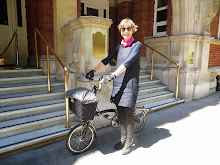
My photo
Whether it's five miles or five hundred miles, riding a bicycle is more fun than anyone ever told me! My New Year's Resolution to cycle 10 miles a day or 40 minutes on a spin bike has meant that by the end of May I have cycled 2,600 miles! Because of my cycling wardrobe the weather has not stopped me from cycling (unless it really is -5 degrees or with wind gusts of 25 mph). Cycling in style and in comfort is really important to me as I don't really want to be covered in logos looking like a Ninja as I buy groceries or attend meetings. I have found some things that work for me but am always looking for new pieces. For me, Evans Cycles and Cycle Surgery for the basics. My two favourite brands for my wardrobe are www.velorution.com and www.velovixen.com but I am always looking for new pieces. I would love to know what works for you and why. Happy cycling!
Showing posts with label what to wear. Show all posts

Wednesday, 30 January 2013

Top Tips for Tops

For rides less than five miles depends entirely on where I am going - and I dress for that.  The only extras I take are a waterproof jacket and my cycling helmet. 

If I'm going for a pootle for just for the exercise I wear a sports  bra, a baselayer underneath a cycling shirt with a dress or skirt over the top, with leggings underneath.
Most of the clothes shops on the high street have suitable tops, it's just a question of finding the ones I like.  Any recommendations gratefully received!
For day rather than five mile rides I have a couple of Assos short sleeved cycling shirts with zips up the front for temperature control.  Because of this I tend to wear them the most. 

With the baselayers chosen, the type of tops will vary depending on where you are going and how warm it is.

Armwarmers are a tremendous invention as they do lift how warm you are if the temperature drops a little and they fold up into a small space when they are not needed.  When worn correctly you are not supposed to see the join!


In the very deep winter when temperatures are below 0 degrees I tend to do flat rides not too far from home on main roads that have been gritted in order to avoid cycling on ice!   Two Merino baselayers, an Assos baselayer, a longsleeved jersey under a Gore Oxygen jacket has worked perfectly for me. The Gore Oxygen is both windproof and waterproof but breathes to stop you from overheating.  Zips up the front allow me to have a thermostat and control my body temperature. I also wear a buff which is not the same as cycling in the buff!


In temperatures around 11 degrees that may go down to four degrees and is not flat I would wear the same but if there is a hill I would remove the jersey towards the bottom of it to allow for my body temperature to rise as I aim for the summit trying to keep up with these guys!

As the weather becomes warmer through the year the jacket may not be required, nor two baselayers. When temperatures are 23 degrees C and above I still wear a merino under a short-sleeved cycling shirt and keep armwarmers and a windstopper gilet on the bike along with an Assos Climatshut jacket which is also a bit of a boil-in-the-bag kind of jacket but stops you from being cold if the temperature drops dramatically, unexpectedly.  


I am always looking for tops to wear over leggings that are made of lycra or a stretchy material.  Wool is not a good fabric for this as it would become unshapely and would also hold water should it rain - although if I was doing 5 miles or less, this wouldnt be a problem.

Most of the clothes shops on the high street have suitable tops, it's just a question of finding the ones I like.  Any recommendations gratefully received!


An Autumnal day

For longer than five mile rides the wardrobe changes make things more comfortable.  The advancement in Lycra and Merino allow the body to move without restrictions, managing body temperatures and making the time on the bike about being on the bike and not about fabric malfunctions. Padded shorts, longs, threequarter lengths depend on your shape and how you feel.  I look better in 3/4 length rather than shorts but that's just me.  Cleats and SPDs or LOOK enable maximum use of pedal power.

Predetermined and pre-reccied routes mean that the ride is about the ride and not about being lost, hungry and late.  

A sunny day in August found me on a train to Brighton to meet up with a friend so that we could mosey around the seaside town and pop out to Lewes for a forty mile loop via Haywards Heath on one of their weekend routes.


Booking trains in advance when possible is economical and easy although battling with a bike reservation can add some stress.


A bakery stall at Brighton Station could have upset the calorie intake:calorie burn ratio for the day


                 Sahar in Lewes with her new wheels.  Too cool for school!


In Haywards Heath for Lunch at Cafe Rouge we hung up our helmets and enjoyed a lovely lunch


This sums up the day - a lovely route around West Sussex.  40 miles for the day.

Accessories for the bike

A Potentially Never Ending Page!

Lights (red at the back of the bike, white at the front)

These are paramount and there are a myriad of options available.  It is not just about seeing where you are going but about being seen by others.  In a town under street lighting there is probably less of a requirement to have laser-burning lights but you do need to be able to see potholes, rubbish, pieces of glass and all the other things that could give you a puncture or bumps and drains which are best avoided.

A dynamo light takes power from your wheel rather than batteries, but this is expensive as you need a special wheel to be built.  A top of the range option worthy of consideration though.  

Battery operated lights require batteries that work.  I keep a spare set of batteries on my bike at all times. I also have two sets of front lights and rear lights on my bike so that I dont end up with no lights.  This may be excessive but I'd rather have too many than not enough.

Unfortunately all lights need to be easily removable because if you are leaving your bicycle outside they will potentially be removed.

Cateye are popular, Exposure are top of the range, I just bought two Moon lights as I like their shape and they are very bright although they need recharging. 


Placing your lights is worth consideration - for example on the seat post is only ok if you never wear long jackets.  Staying visible is crucial.

Computer

If you like to know your mileage, calories, cadence (pedal spins per minute), heart beat or where you've been and where your going there is a computer for it.  I have a basic Cateye on my bikes that tell me the first three above although as part of a fitness drive I now have a Polar FT7 wrist watch which measures my heartbeat. 

Garmin are the number one computers for routes and stats.  They have GPS and are sophisticated computers that can practically put the kettle on!   There are also many Apps on smart phones that offer useful cycling stats but they also drain the power to your phone.  Being contactable is probably more important! 

These are options and not essential.  Lights are essential.

Water Bottle and holder

Dehydration is not good for you.  It is amazing how much water is used by the body when cycling, even moreso on cold days than warmer ones.  Making sure you have and that you drink water on your bike (replaced every day) is another essential.


Mudguards

The one at the front protects the chain from mud and debris on the road.     The one at the back protects your back from mud and debris on the road.  However, if they are not fitted correctly they can cause punctures by rubbing on the tyres and if they come off on a group ride they are extremely hazardous to the people behind you. 

Locks 

These vary in price and security but if a bike thief wants to steal your bike, eventually he/she will.  Adding protective barriers like two locks, keeping it inside, keeping an eye on it if it's on the street will all help.  Your insurance company probably have a minimum recommendation to use.

The police operate a Bike Register which they use as a reference when recovering stolen bikes.  Contact your local police force for details.  

Basic Kit

Spare inner tubes, tyre levers, a pump, a puncture repair kit, a set of allen keys, a lock (or two), a flapjack/dried fruit and nuts/snack, extra layer, disposable gloves


 A Track Pump

This means that you can make sure the pressure in your tyres is exactly what it should be (embossed on the tyres) 


Cycling Tights or Leggings

Whether long, or short I use them as a base layer for my cycling look for any rides longer than five miles.  For me it's all about being comfortable and always in black so that they can look like tights. They are an extremely important item of my cycling wardrobe as they ensure I have a completely comfortable ride on my bicycle.

Padded shorts, longs, 3/4 lengths (ending just below the knee) depend on your shape and how you feel.  I personally look better in 3/4 length rather than shorts but that's just me.

As with all things the prices can vary enormously.  Assos is top of the range and they do bib shorts with leg warmers which means you can cover your legs if the temperature drops.   Castelli 3/4 leggings work best for me in the summer. 


As a Five Mile Cyclist I then wear a dress or skirt over the top.   Clothes manufacturers like H&M and Levis are beginning to make jeans and clothes suitable for cycling in so fingers crossed that this expands to other brands.

For longer than five mile rides the wardrobe changes make things more comfortable.  The advancement in Lycra and Merino allow the body to move without restrictions, managing body temperatures and making the time on the bike about being on the bike and not about fabric malfunctions.

For the autumn and winter on long flat rides when temperatures are below 11 degrees I wear two pairs of full -length leggings, one pair is padded the other isn't.    If the temperature drops to 4 degrees I wear overtrousers on top which not only keep me warm but also keep me dryer in the rain. Mine are made by Gore.  If the ride is hilly I remove the overtrousers before the hill!


Shoes - All Clipped in and Ready to go

Cycling more than five miles often means moving at speed.  Feet suddenly take on a very important role in terms of safety so loose-fitting shoes, delicate strappy sandals or open toed/heeled shoes give very little control and grip for when you need to stop.  

For me, my footwear determines the rest of my wardrobe.  This is probably why I wear cycling leggings because my most favourite footwear on my bike are my cycling shoes. Cleats and SPDs or LOOK enable maximum use of pedal power. They allow me to connect to my bicycle making it part of me.  They also mean I can go faster!

But I cant walk around the office in them all day so I have to take another pair. Or I wear a pair that complements the leggings. For me high heels are not conducive to good cycling and not good for the shoes either so my fave shoes become luggage.


The only alternative I have found are ankle boots with wedge heels rather than heels and ideally have a rubber sole. 

                                               These are from Comptoir des Cotonniers


                                            And these I liked so much I bought two pairs!


If I am cycling in the rain around London I wear Doc Martins or trainers.

For long winter rides when the temperature is below 11 degrees I wear cycling shoes with overshoes which are made specifically to fit.  They are not 100% waterproof but they do add a layer of warmth and protection against rain. 


Luggage

From handbags to holdalls and panniers to purses the luggage is dependent upon what where you are going and what you need to take with you.


Although this is listed under Accessories for the Bike, in order to assess the sort of luggage you may need here is a reminder of my recommendations for your basic cycling kit.  A pump, a puncture repair kit, tyre levers, allen keys, lights, spare inner tubes, a small rag, a water bottle, an emergency windproof layer, a pair of disposable gloves and a flapjack.  I also have Lypsil, a nail file and a lipstick!

                                 
                                          Proof! My Basic Kit for every time I ride my bike!

Not forgetting my mobile and my house keys!  Beyond that are a myriad of options depending on where you are going and so the requirements change all the time.

When I first started cycling I used to have a very large bumbag in which I kept most of the items shown in My Basic Kit above. For a couple of longer trips I also had a rucksack even though I have always disliked them as they always look scruffy to me.  

Little did I know how much the luggage attached to me rather than my bike was dragging me down and how uncomfortable it was.  I now have 99% of my luggage attached to my bike leaving only a small wallet around my waist for keys, cash and lipstick.   

The range and type of bags available is enormous. There is pretty much a style for everyone.  My collection is a real variety and I tend to swap them about depending on where I am going and what I am wearing - the waist wallet really helps in making sure I don't leave home without my essentials!  


The main consideration I give the luggage I have bought is how waterproof is it, how big is it and is it easy to fix to my bicycle.                                    


There are a whole range of bags for the handlebars but they can really affect the aerodynamics and the steering of your bike. I put one on my bike and didn't like it.

If you are trying to travel light, small saddlebags for the basic cycle kit mentioned above are another alternative particularly if you are thinking about wearing a cycling top which will have a series of pockets.     


Tuesday, 9 October 2012

Lingerie and Baselayers

With an eye on BBC weather and weatherspark the next step for me in terms of wardrobe is underwear.  We are all unique and for me, wearing a correctly measured sports bra makes a real difference to how comfortable I am when cycling.

www.rigbyandpeller.co.uk

Many shops including M&S, John Lewis, Top Shop along with department stores offer a measuring service although not all of them are accurate.  Rigby & Peller are worth the extra cost and I have found them to be the most accurate.

The next layer I wear is a baselayer.  I am a real fan of Merino wool baselayers as they have a very effective and efficient way of absorbing any body sweat created whilst riding.

Endura are great Merino baselayers available from most bike shops and Helly Hanson for the summer as they wick away the sweat.  In the winter if you are wearing two baselayers and one of them becomes wet with sweat, remove the bottom one and put on a dry layer rather than cycling in wet clothing.   Evans and Cycle Surgery stock Endura.  Assos do a thicker baselayer which is more top of the range but worth the investment.

For the lower part of the body, making sure that everything fits correctly and there is no rubbing which will result in blisters and sores in sensitive places.  Whilst modern technology in fabric design means that it is possible to wear cycling shorts as underwear I prefer to wear seamless underwear available from M&S.

 
Socks depends on the temperatures, heavy merino in the winter, sealskinz if it is going to be very wet and lighter pairs in the summer.  As with everything else they need to fit so that blisters and rubbing are not created by wearing socks that are too big.  I often carry a spare pair - in a plastic bag so that they stay dry!